*All enrollment is subject to instructor discretion. If Northwoods Medical LLC staff does not feel that a perspective student aligns with the company mission, we will respectfully decline to train you. Northwoods Medical LLC reserves the right to refuse services to anyone, for any reason.*
*If at any point a student’s behavior becomes inappropriate or counterproductive to the learning of other students, they will be dismissed and removed from class with no refund. *
———————————————————————–
NWM 1: Initial Trauma Management
NWM 1: Initial Trauma Management is the core of all other classes through Northwoods Medical. The course curriculum is firmly rooted in the research and proven effectiveness of Tactical Combat Casualty Care.
NWM 1 aims to take a citizen with little to no experience with trauma medicine and build them up to a baselevel of competency. While the curriculum covers everything in a basic Stop the Bleed course, we go much further.
Students will become familiar with an abbreviated P-MARCH-PAWS algorithm developed by the Committee on Tactical Combat Casualty Care (CoTCCC). NWM 1 builds on the fundamentals of P-MARCH, ensuring that the students have a firm grasp of these basic principles before continuing in the algorithm in NWM 2.
This is a very hands-on class, come ready to work. Classroom education is as limited as possible before getting the students practicing what they are learning. Most of the day is spent preforming hands-on repetitions and going through instructor led scenarios. By the end of the course the students will have gained confidence in their ability to respond appropriately to traumatic injuries that have a high likelihood of fatality without intervention.
The course objectives are:
- Identifying the need for citizen response to trauma.
- Understanding basic anatomy and physiology related to dealing with: life threatening massive hemorrhage; compromises to airway; compromises to the respiratory system; prevention of hypothermia.
- Discussion of the P-MARCH algorithm.
- Introduction to the tools recommended by the Committee on Tactical Combat Casualty Care and Stop the Bleed to address injuries in the P-MARCH algorithm.
- Function as the responder in simulated events that allow the students to perform the skills learned in the classroom under direct supervision of the instructor to provide real-time feedback and guidance.
- Open discussion of recommended gear, Individual First Aid Kit (IFAK) contents and packaging methods, med bags and vehicle med bags.
Packing List:
Training supplies will be provided
- Notetaking material
- Personal IFAK’s and or trauma bags that you would like to work out of. Recommended to remove the “real” contents and restock with the provided training supplies.
Note: This is a “wet” class. Real trauma is messy and in order to best prepare the students, this class is no exception. While the fake blood will typically come out in the wash, please wear clothing that you do not mind potentially being stained red.
By registering you acknowledge and agree that Northwoods Medical LLC is not responsible, in any way, for clothing or gear that may become stained. If you wear your fancy $300 Crye pants and they get stained, that’s on you.
———————————————————————–
NWM 2: Tactical Combat Casualty Care (TCCC) for the American Partisan
Prerequisite: NWM 1: Initial Trauma Management
Class minimum: 8
Class maximum: 12
NWM 2 builds off the foundational skills of hemorrhage control we developed in NWM 1: Initial Trauma Management. Continuing into NWM 2, we begin to apply the skills we are learning to a specific application-initial trauma medicine in a hostile environment. This is an evidence-based course that dives into the algorithms and interventions developed by Naval Special Warfare and continuously evaluated and updated by the Committee on Tactical Combat Casualty Care (CoTCCC). We take the proven efficacy of TCCC and combine it with concepts that are applicable to the American citizen that doesn’t operate with state-level backing.
Course topics include:
- Understanding of TCCC-what it is, why it was developed, how it is used today
- CoTCCC: How to stay up to date on current TCCC recommendations, algorithms, and changes to previous recommendations
- P-MARCH-PAWS algorithm
- Patient exam
- Selection and proper application of CoTCCC recommended equipment used in the algorithm (Tourniquets, gauze, pressure dressings, chest seals, nasal airway adjuncts, needle decompression, etc)
- Abnormal injury patterns (for example junctional injuries and eviscerations)
- Working on a casualty as a squad
- Patient movement and evacuation
- Individual First Aid Kit (IFAK) contents, carry method and set up
- Equipment selection and set up of vehicle and squad sized med bags
This is a very hands-on, physical course. We will be practicing these skills on each other, using fake blood, and moving simulated casualties. While the skills learned in TCCC are applicable regardless situation, this course is focused on combat medicine in a hostile environment.
Packing list:
- Clothes that can get potentially stained by fake blood
- Sturdy boots
- Personal IFAK’s and/or med bags (training supplies will be provided to swap out your “live” med supplies-using your own bag helps you get practice working out of it and finding what works and what doesn’t)
- Note taking material
- Snacks
- Water
- Sack lunch
- Optional: Any kit you would like to run
Note on kit:
If you have kit (plate carrier, pistol belt, helmet, etc) you would like to run during scenarios, by all means wear it. Be aware there is a possibility it may be stained by fake blood. By brining it to class you have acknowledged this and understand that Northwoods Medical LLC is in no way responsible for your Crye’s you brought to class and got stained.
Note on weapons:
If you would like to bring a rifle to class for scenarios, get down with your bad self. As this is a very physical class with us moving each other and such, if you bring a rifle, it MUST either be AIRSOFT or be rendered inert with a Mantis bolt and battery back-full stop, no excuse. Bring your own or work with the hosting facility to reserve one for you. During classroom instruction, please feel free to carry a pistol. Once we transition to physical exams on each other and scenario’s, live blades and real pistols are not allowed in the training area.
Enrollment is currently processed through 3Aces PSOC in Spokane Valley, WA.
Enroll at: https://www.3acespsoc.com
Course fee’s non-refundable regardless of circumstance on the students part. If Northwoods Medical LLC has to cancel the class for any reason on their part the fee’s will be refunded.
———————————————————————–
NWM 3
The Clinician: Austere Clinical Skills
February 2021. Executive level leadership was on site to gauge staff sentiment on denying healthcare services to people who refused to comply. Organically, nurses, providers and clinical staff began discussing behind closed doors how to treat their patients if healthcare services were cut off for…the defiant. These are the roots of The Clinician.
The Clinician is not a trauma class. There are no high-speed tourniquets and wound packing. A tourniquet won’t help you when a family member is crying in pain from a urinary tract infection. This class is focused on the basic clinical skills to help deal with injuries and ailments akin to an urgent care that can be reasonably treated without a functioning infrastructure.
This course is designed to take an average citizen off the street and impart as much knowledge as possible in the span of two days. The goal is to empower students to be better prepared to medically care for their families and community.
There are no certificates. No educational credits or CEU’s. Just a better understanding of what to do when help is not just a phone call away.
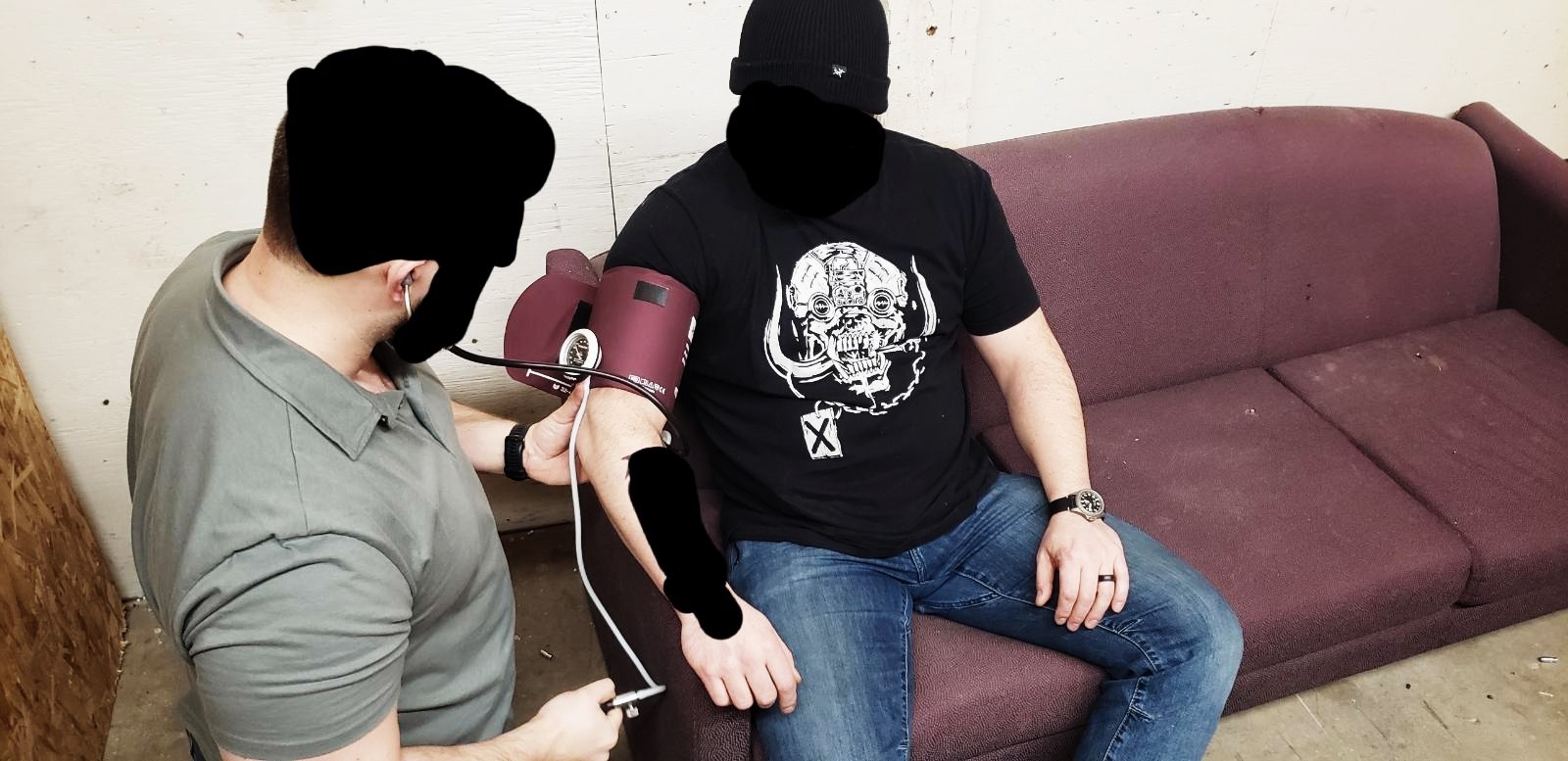
What The Clinician is not: Legal medical advice. It is not taught by a physician.
What The Clinician is: An open discussion, facilitated by a former U.S. Navy Corpsman with 11 years of EMS, Level 1 trauma, navy medicine, primary care and urgent care experience.
Topics covered include:
- Patient assessment
- How to accurately obtain a full set of vital signs
- Point of care testing
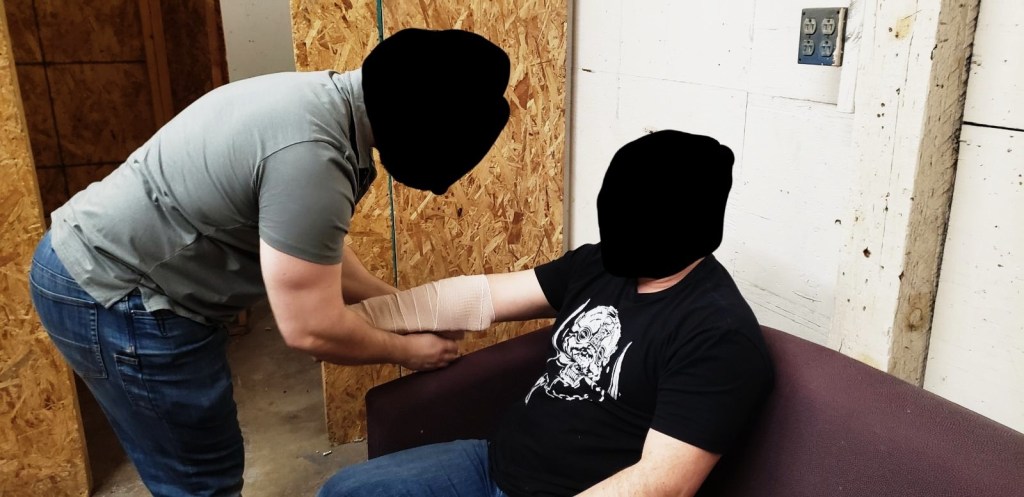
- Splinting
- Wound care
- Preventative medicine
- Common diseases and injuries
- Austere clinic setup
- Supply logistics
- Basic pharmacology
- Medication’s
- Hands on clinic rotations and seeing patients in a sick call setting
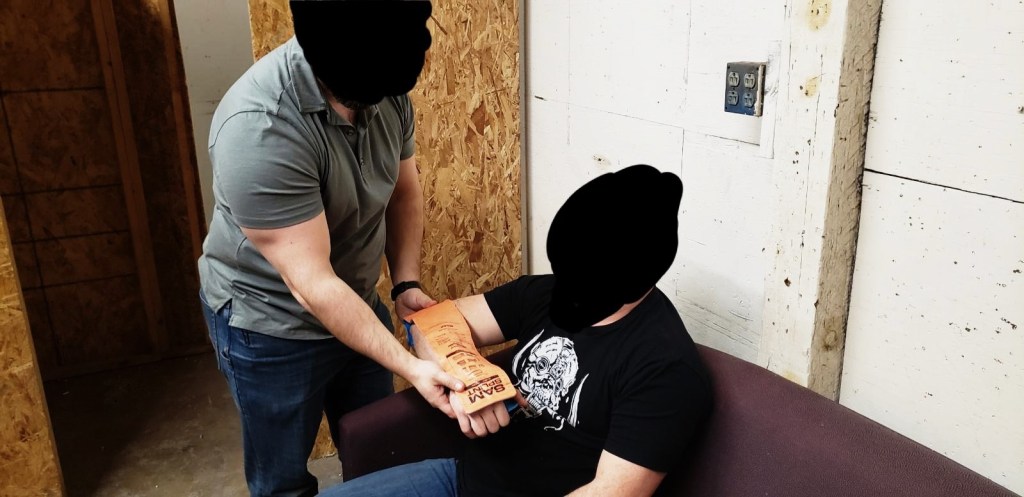
Who this class is aimed at: The average citizen with little to no clinical background wanting to learn basic clinical skills to help care for their family or community if higher level care is not available.
This class is not intended for individuals with a clinical background. While you are welcome to attend, you should already have a firm mastery of these clinical concepts if you see patients, professionally, on a daily basis in a clinic or hospital setting. You would likely find the class repetitive and not get as much value out of it as you may want. This is a basic level clinical skills course.
Note: This is a hands-on course. We will be doing physical exams on each other and doing a lot of touching. Enrollment is open to men and women. Don’t act like a creep.
Packing list:
Training supplies will be provided.
Any personally owned diagnostic equipment you plan to use in a real-world scenario: BP cuff, stethoscope, pulse oximeter, thermometer, otoscope etc.
Reference materials: Any reference materials you would use including textbooks, pocket guides, manuals or print outs.
Note taking material.
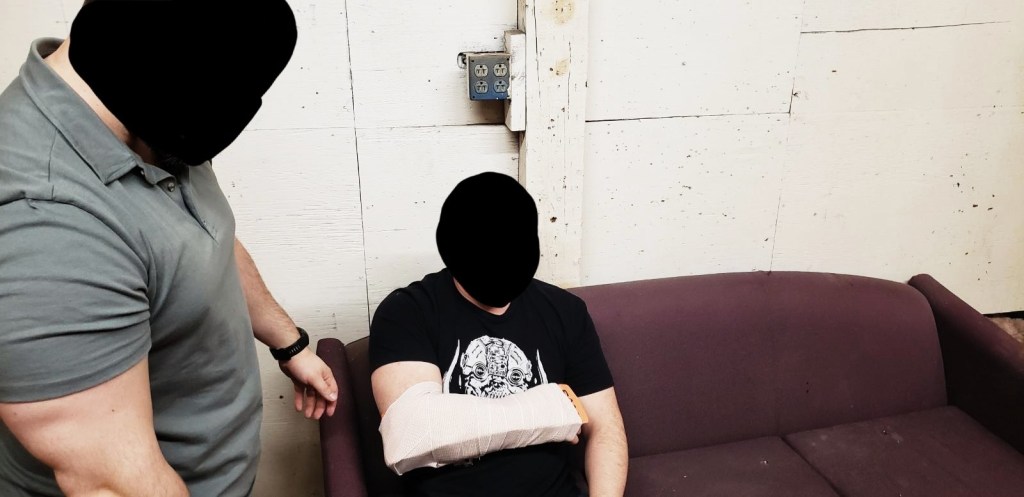
For the clinical day (Day 2), bring anything you think will be useful in setting up an austere clinic. Think outside of the box. Battery operated Christmas lights or a way to light a small structure, headlamps, battery banks, fans, notepads, white boards, reference materials etc. Students may utilize any hard copy references available to them to help narrow possible diagnoses, treat, and develop a plan of care. For our purposes during sick call, the internet will be unavailable. If you have saved information on a laptop or tablet you may utilize them. Students may utilize radios to simulate telemedicine consults.
Day 1: Clinical Skills (didactic). From how to take accurate vital signs, what goes into a good SOAP note and physical exams to splinting, point of care (POC) testing, and coming up with a treatment plan. This is where we get into the nuts and bolts of how to care for our patients
Day 2: Setting up an austere clinic, clinical “Rotations” and running a sick call. This is the hands on experience where we take what we learned day one and implement it.
Enroll at: https://www.3acespsoc.com/courses
A $100 non-refundable deposit is due at time of registration. This is non-refundable regardless of circumstance on the students part. If Northwoods Medical LLC has to cancel the class for any reason on their part the deposit will be refunded.
———————————————————————–
NWM 4
Field Med: Field Medicine for the Partisan Citizen
Prerequisite: NMW 1 & 2
Field med is a synthesis of concepts that aims to equip the American partisan medic with the skills they need to operate in a field environment. We’ve combined aspects of Tactical Combat Casualty Care (TCCC) and wilderness first aid/first responder to help you build on what you learned in NWM 1: Initial Trauma Management. This is an immersive and hands on class that gets you out in the field and makes you think.
Stop the Bleed: Certified instruction through Stop the Bleed. Course certificate provided upon completion.
Coming soon:
Basic Life Support (BLS): Heartsaver, and provider level BLS training. Accredited through the American Heart Association (AHA). Instruction is compliant with AHA requirements and BLS cards are provided upon completion of the course.
 Northwoods Medical